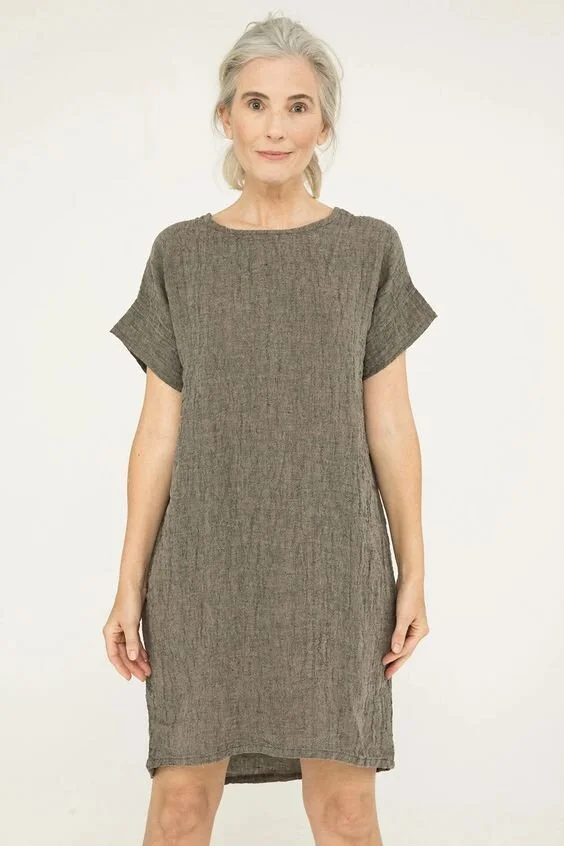
Hello, here’s the second post about how to choose fabric for your sewing project. In the first post I discussed composition and how does different fiber content influence how clothes made with these fabrics behave.
In this second post I will talk about drape and how it affects the look of your garment. Drape refers to the fluidity or rigidity of the fabric. This means that fabrics with high drape are flowy and create small creases when they hang, they also mold over the curves of the body. The fabrics with low drape are stiff and maintain their shape, they tend to create more structural shapes. Fabrics can be light weight or heavy weight but they all have drape and it’s not always the same according to their weight (not all heavy weight fabrics have low drape etc). There’s no right or wrong way to use fabrics according to their drape, it’s just very important for you to understand how drape works so you can choose fabrics for your sewing projects and make a garment that will turn out as you imagine in your head. How to see the drape? The easiest way is to hold up the fabric in your hand and see how it falls. When you are shopping for fabric just unroll a bit of fabric and raise it, it’s the best way to see the drape.
I think it’s the easiest to understand how different fabrics drape when you see clear examples so I wanted to show you some garments made with different fabrics. The first part of this post is illustrated with photos from a clothing brand called Elizabeth Suzann. If you are not familiar with this brand I’d highly suggest you to take a look at their website because their collections combine the best of modern design and natural fibers. I love everything about this brand because their story is something like a true sewing business fairytale: the founder Elizabeth started as a seamstress sewing all the clothes she sold by herself and then gradually grew the business which now is world known. All the clothes are produced locally in the States in their own factory where professionals work in great conditions and the brand makes sure that the whole manufacturing process is fair both for the employees, the environment and the clients. They produce limited quantities of garments each week making sure that everything is in balance...their philosophy is clearly on the other side of the fast fashion industry. You can learn more about the company on their webpage and Liz also shares a lot of what’s going on inside the factory over at Instagram. One of the key aspects about this brand is that they launch signature collections of clothes perfect for wardrobe building. They also make their basic styles in different fabrics so their example is just perfect for us to observe in order to find out more about drape in different fabrics.
Hola, aquí va el segundo post sobre cómo elegir telas para tus proyectos de costura. En el primer post hablé sobre composición de las telas y cómo eso influye en las prendas que coses con ellas. En este segundo post hablaré sobre la caída y cómo eso afecta a cómo quedan las prendas.
La caída refiere a la fluidez o la rigidez de la tela. Eso significa que una tela con mucha caída “fluye” cuando cuelga, parece que se escurre, se forma un movimiento suave de pliegues. Las telas con mucha caída suelen seguir las formas del cuerpo. Las telas con poca caída son más tiesas y mantienen bien su forma, normalmente crean formas más estructuradas. Las telas pueden ser más ligeras o más gruesas pero todas ellas tienen la caída y no siempre eso está acorde con su grosor (no todas las telas gruesas tienen poca caída etc). No hay una manera correcta o incorrecta de usar telas según su caída, simplemente es muy importante entender cómo funciona la caída para que puedas elegir telas para tus proyectos de costura para que estos salgan como tú los imaginabas. Cómo ver la caída? Lo má fácil es sujetar la tela con la mano en el aire y observar cómo cae. Cuando compras en las tiendas puedes sacar un poco de tela del rollo y levantarlo, es la mejor manera de valorar la caída.
Creo que lo más fácil de entender la diferencia de la caída en telas si ves ejemplos claros así que os voy a enseñar ejemplos de prendas hechas con tejidos distintos. La primera parte de este post incluye las fotos de una marca de ropa que se llama Elizabeth Suzann. Si todavía no conoces esta marca te recomiendo mucho ver su página web porque sus colecciones unen lo mejor de diseño moderno y fibras naturales. Me encanta todo sobre esta marca porque su historia es algo como un cuento de hadas hecha en realidad en el mundo de moda: la fundadora Elizabeth empezó ella misma coser todas las prendas que vendía en mercados de diseño pequeños y gradualmente ha conseguido que su marca crezca y ahora está reconocido en todo el mundo. Todas sus prendas están producidas en Estados Unidos en su propia fábrica conde profesionales del sector trabajan en condiciones buenas y la marca asegura que todo el proceso de producción textil es justo para sus trabajadores, el medioambiente y sus clientes. Se producen cantidades limitadas de prendas cada semana, así se asegura un balance en todo el proceso...su filosofía de trabajo está claramente en el otro lado de la moda rápida. Puedes leer más sobre la empresa en su página web y Liz también cuenta bastante sobre lo que pasa en la fábrica en su perfil de Instagram. Una de sus ideas más importantes es que ellos producen colecciones básicas de prendas atemporales que son ideales para crear un armario cápsula. Sus prendas básicas están también hechas con diferentes telas así que es un ejemplo muy bueno para observar cómo se ven telas con diferentes caídas.