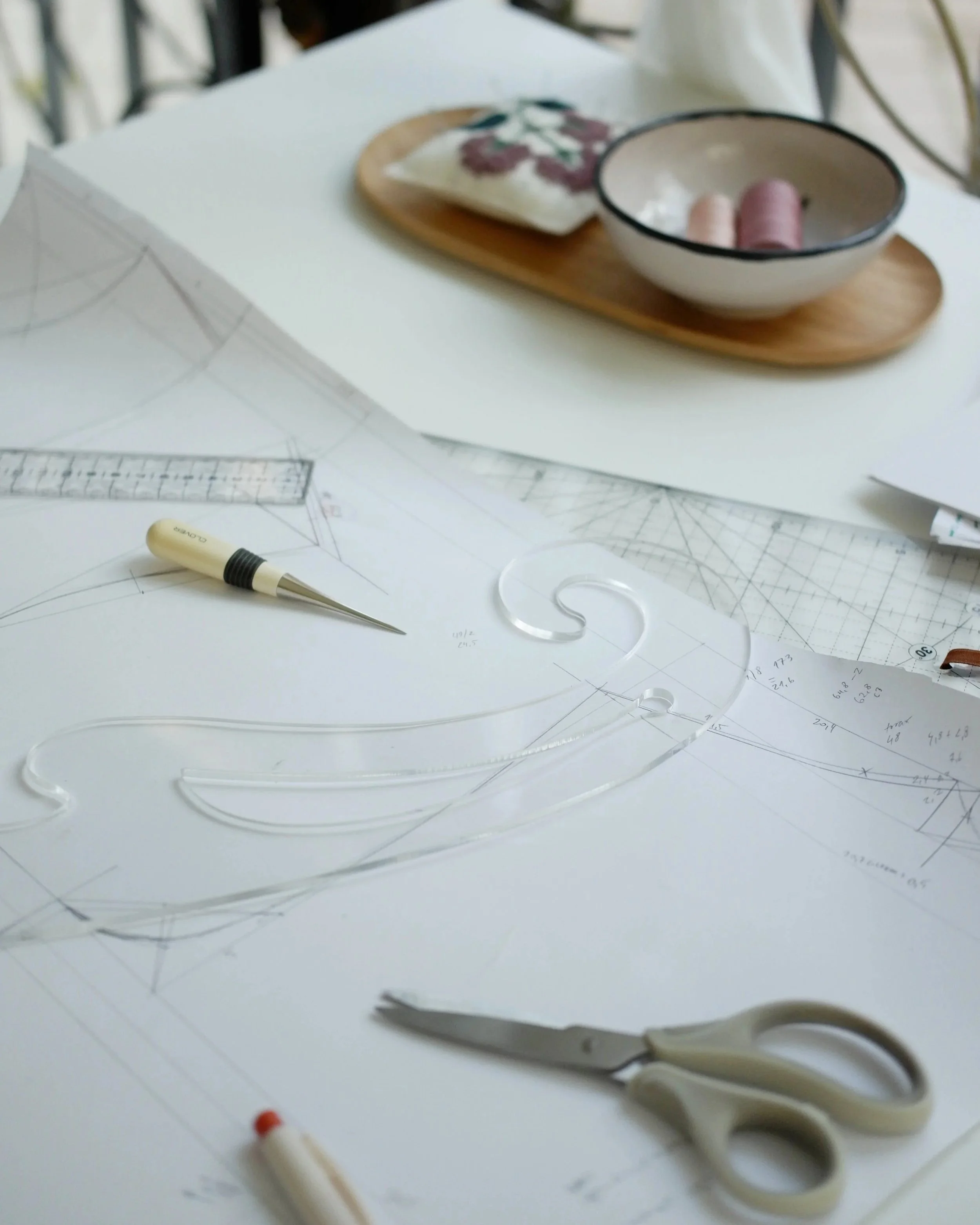
I’ve been meaning to write a proper post about the second half of the year of my patternmaking studies (the first one is here), but everything else that was on hold while I was studying just got forwarded to the “urgent” list after I was done. In spring I took patternmaking course number 3, which was about close-fitting bodices (and dresses), and course number 4, about pants. These two didn’t overlap as much as 1 and 2 (which was a situation I’d rather not experience again, haha), but I did have to plan very well to have enough time for both.
Llevaba tiempo queriendo escribir una entrada en condiciones sobre la segunda mitad del año de mis estudios de patronaje (la primera está aquí), pero todo lo demás que había quedado en suspenso mientras estudiaba pasó directamente a la lista de “urgente” en cuanto terminé. En primavera hice el curso de patronaje número 3, sobre cuerpos entallados (y vestidos), y el curso número 4, sobre pantalones. Estos dos no se solapaban tanto como el 1 y el 2 (una situación que preferiría no volver a vivir, jaja), pero sí que tuve que organizarme muy bien para tener tiempo suficiente para ambos.
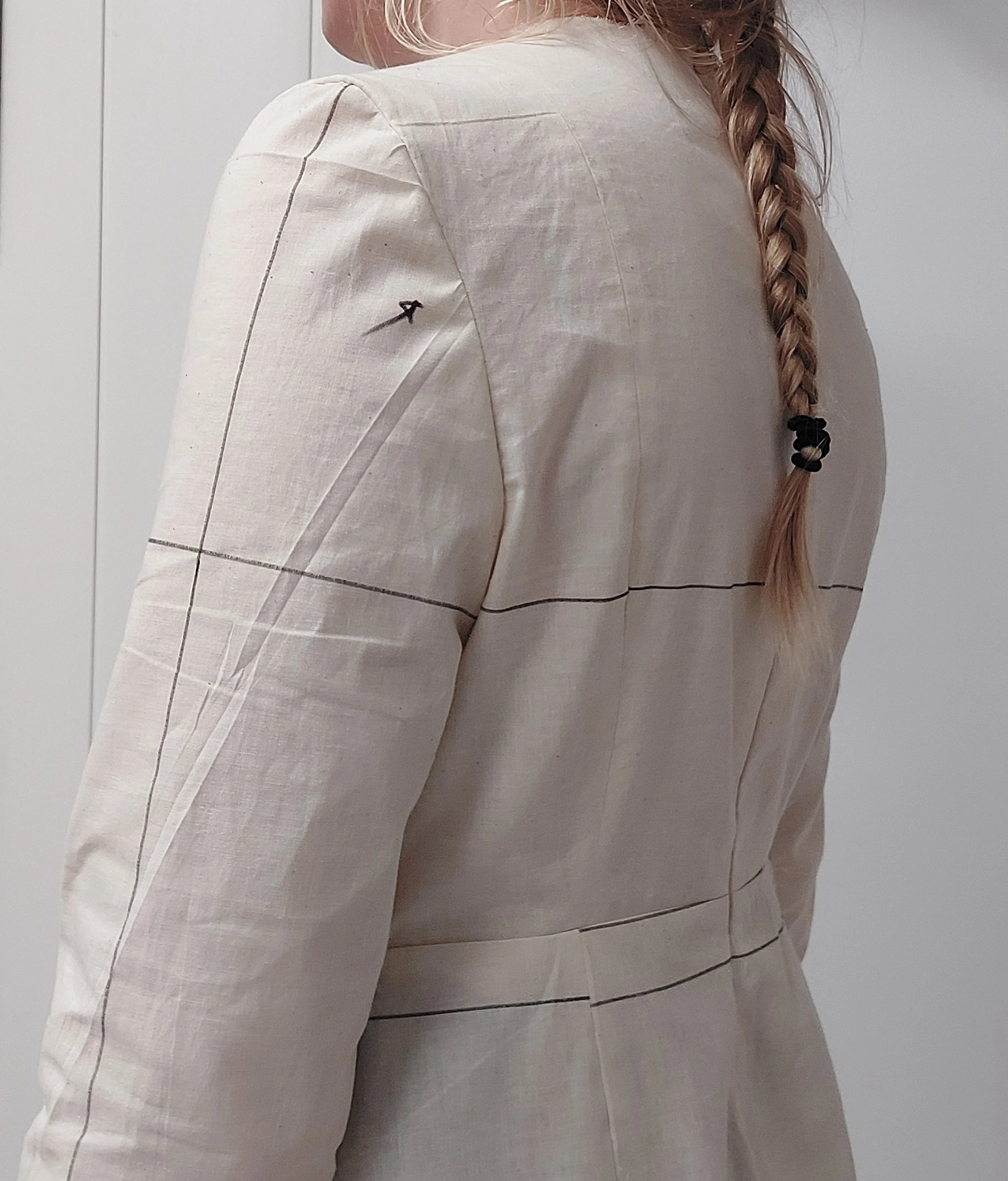
Somewhere in the middle of trying to get the “perfect” sleeve fit (and probably wanting to cry, lol). En algún punto de intentar conseguir el ajuste “perfecto” de manga (y probablemente con ganas de llorar, jaja).
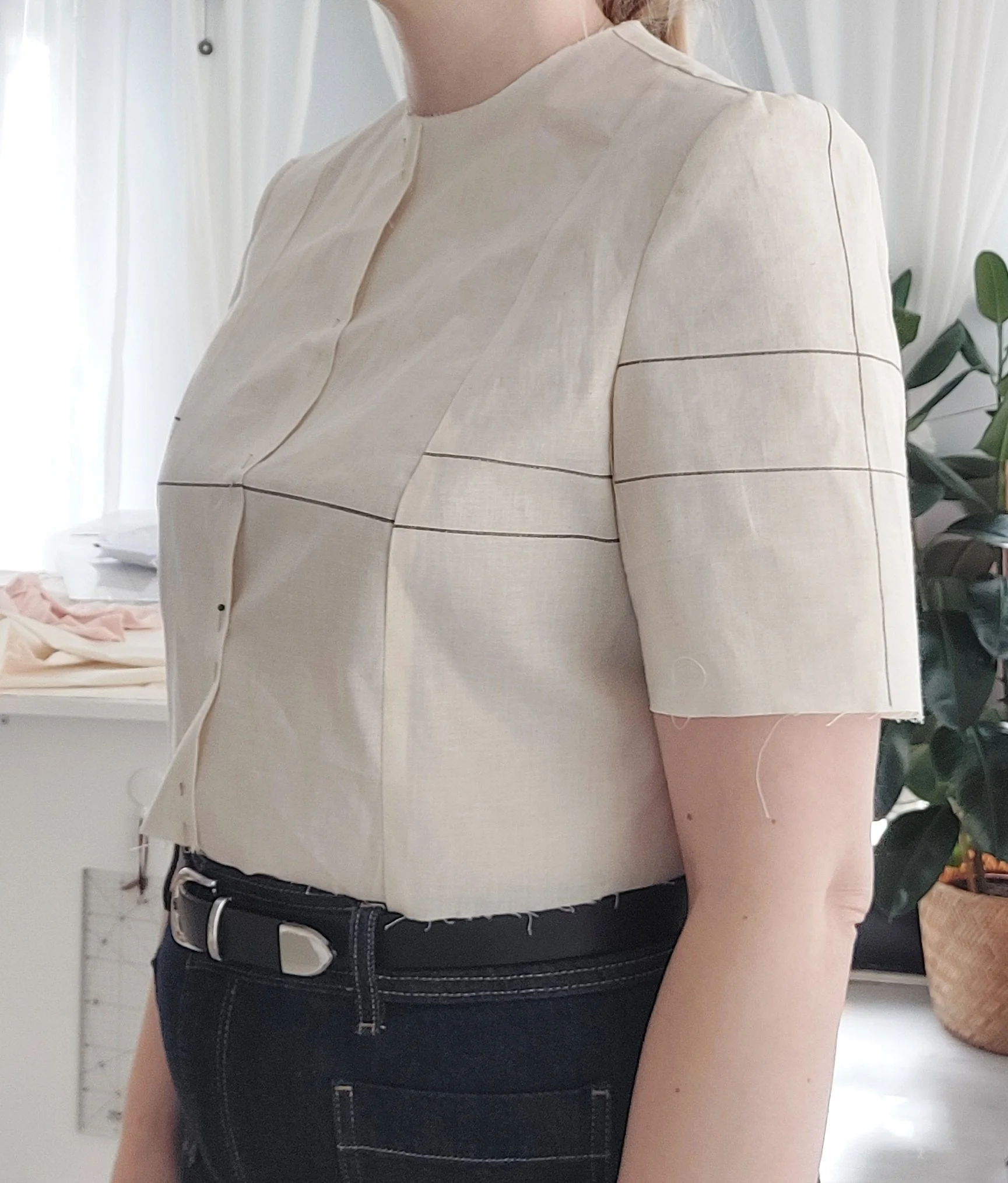
Finally seeing the sleeve fit me (and again probably wanting to cry, lol). Por fin viendo que la manga me va bien (y de nuevo probablemente con ganas de llorar, jaja)
I won’t go into all the details in this post, but the process was very hard. Fitting close-fitting garments on your own, on yourself, is very hard. I think I understood the full complexity of the subject once I was done with it. There were many days I literally wanted to cry out of desperation because I couldn’t get the sleeve or pant crotch fit right, after trying every method I could. I used tens of meters of fabric for the muslins and I unpicked hundreds of seams to resew them. I kid you not, after the whole thing was over, I started to enjoy unpicking. I now find it kind of relaxing and definitely an obligatory part of the process (it’s just inevitable to rework something when sewing). What feels like “ancient wisdom” and “peace” entered my fast-paced head and hands, making unpicking feel like the most natural thing in the world. I mean, don’t get me wrong, it’s still not my favorite thing to do, but I’ve done so much of it that it just feels natural now. Am I a newborn person? Who knows…
No voy a entrar en todos los detalles en esta entrada, pero el proceso fue muy duro. Ajustar prendas ajustadas por tu cuenta, sobre ti misma, es muy difícil. Creo que comprendí la complejidad total del tema una vez que lo terminé. Hubo muchos días en los que, literalmente, quería llorar de desesperación porque no conseguía que la manga o el tiro del pantalón quedaran bien, después de probar todos los métodos que se me ocurrían. Usé decenas de metros de tela para los prototipos y descosí cientos de costuras para volver a coserlas. No es broma, una vez que terminé todo eso, empecé a disfrutar descosiendo. Ahora me resulta hasta algo relajante y me parece una parte imprescindible del proceso (es inevitable tener que retocar algo cuando coses). Algo parecido a una “sabiduría ancestral” y a la “paz” se apoderó de mi mente y mis manos, que van siempre tan rápido, haciendo que descoser me pareciera lo más natural del mundo. A ver, sigue sin ser lo que más me gusta hacer, pero lo he hecho tantas veces que ahora me resulta natural. Soy un ser nuevo? Chica, no sé.
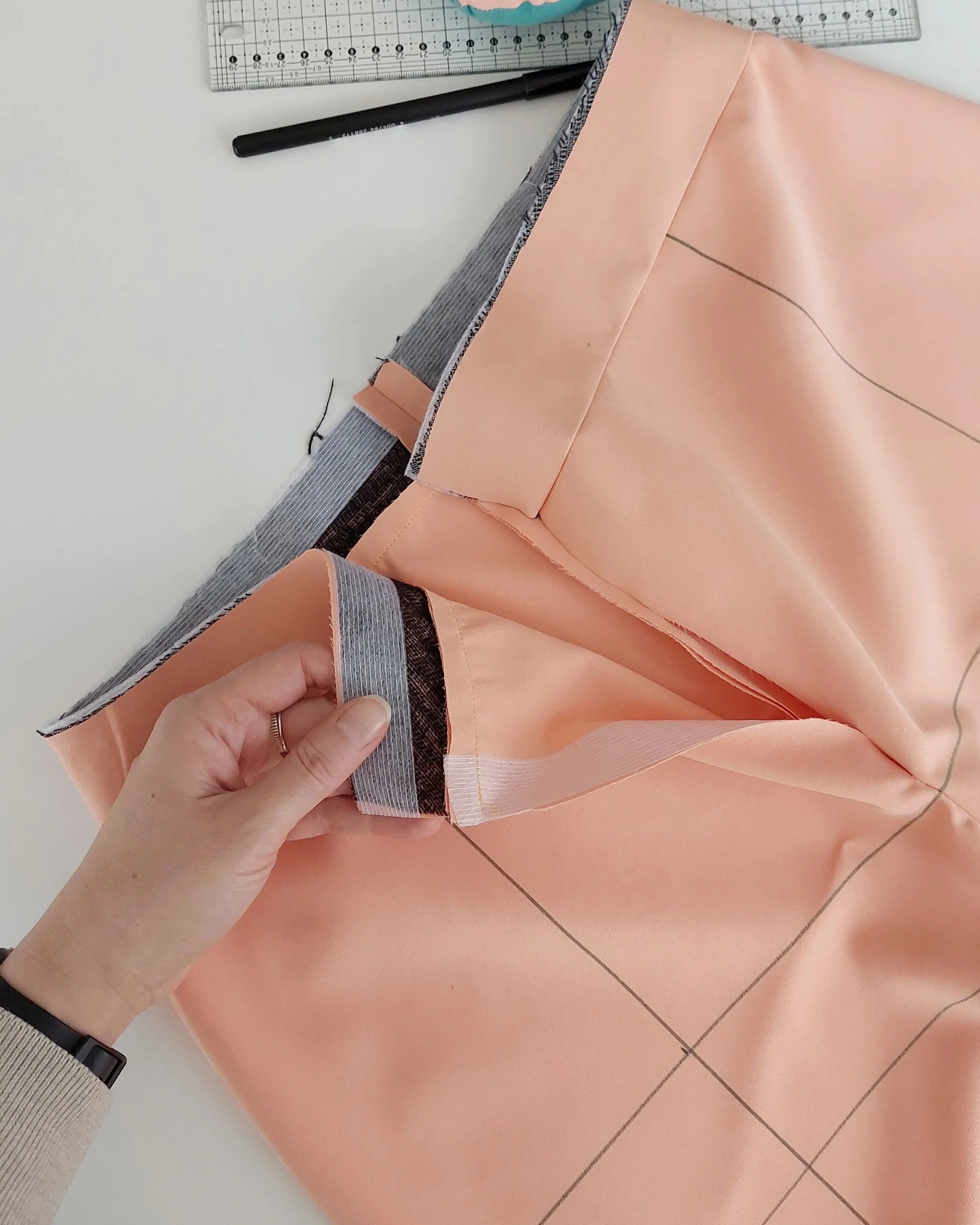
For pants I wasn’t using calico, instead it was this funky peach polyester with a tiny bit of stretch. Even for fitting, you still need interfaced waistbands and a zipper to see the fit correctly. Para pantalones no usé el retór, usé este poliéster tan colorido y ajeno a mi ser. Incluso para probar se necesita la cinturilla entretelada y la cremallera.
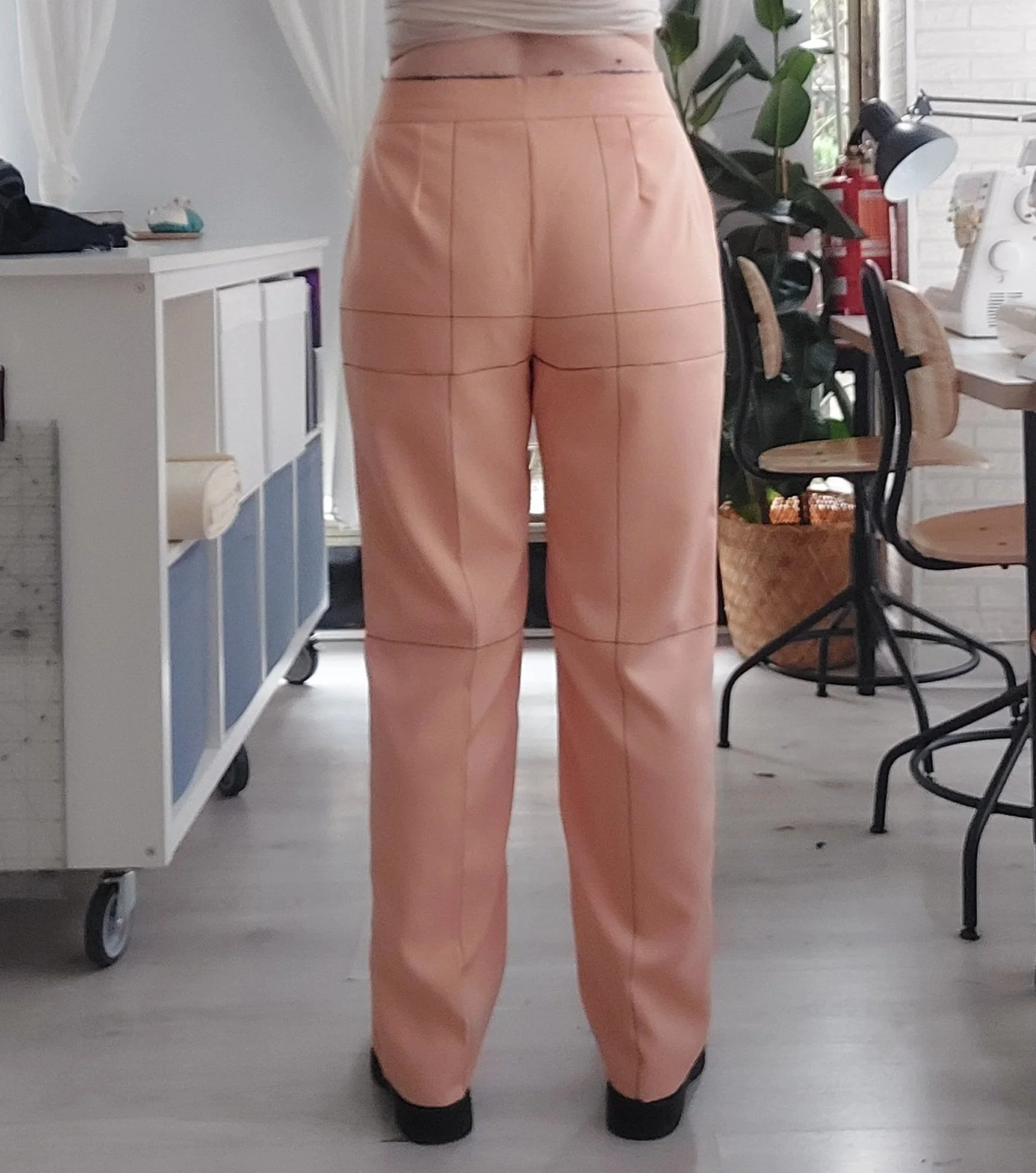
Picture X out of houndreds, following the direction of all the wrinkles and lines. Us humans don’t have eyes on our back and after this course I figured out why: we shouldn’t look at our butts so much, lol. Foto X entre cientos, siguiendo las direcciones de todas las arrugas y líneas. Nosotros los humanos no tenemos ojos en la nuca y después de ese curso averigué el por qué: no deberíamos mirar tanto a nuestro propio culo, jaja.
Apart from becoming a zen master of unpicking, I learned a ton of stuff. I also learned (again) that when you learn more, you see how little you know right now. This is very annoying. A zen master of learning would probably feel at ease knowing they will never get to know everything about a subject. Me, just a regular human being with super high expectations about my work and already a close friend of imposter syndrome…I don’t enjoy this knowledge at all. The whole process of learning is equal parts exciting and humbling, and it certainly brings up many emotions related to one’s self-worth.
You know how you mostly learn new skills when things don’t go smoothly? This was me during spring. I wrestled with so many patterns during those months and this made me deep-dive into the fit subject during uncountable hours. It was also fascinating: I could finally see the puzzle come together piece by piece. The sleeve cap width working together with the height, working together with where your shoulder point actually sits, to bring the volume there. Amazing (to me, lol).
Aparte de convertirme en una maestra zen del descoser, he aprendido un montón de cosas. También he vuelto a darme cuenta de que, cuanto más aprendes, más te das cuenta de lo poco que sabes en este momento. Eso no es agradable. Una maestra zen del aprendizaje probablemente se sentiría tranquila sabiendo que nunca llegaría a saberlo todo sobre un tema. Yo, que no soy más que un ser humano común con unas expectativas altísimas respecto a su trabajo y muy amiga del síndrome del impostor desde hace tiempo… no me lo paso nada bien sabiendo eso. El proceso de aprendizaje mola, pero también te deja en una posición vulnerable, tocando de cerca temas como el autoestima de cada uno.
Normalmente aprendes nuevas cosas cuando algo no sale bien, verdad? Así estuve yo durante la primavera. Peleé con tantos patrones durante esos meses y estuve inmersa en el tema del ajustes durante incontables horas. También fue muy gratificante: por fin pude ver cómo el puzzle encajaba pieza a pieza. La anchura de la copa de la manga combinándose con la altura, y ésta a su vez con la posición del punto del hombro de cada una, para aportar volumen en esa zona. Increíble (para mí, jeje).
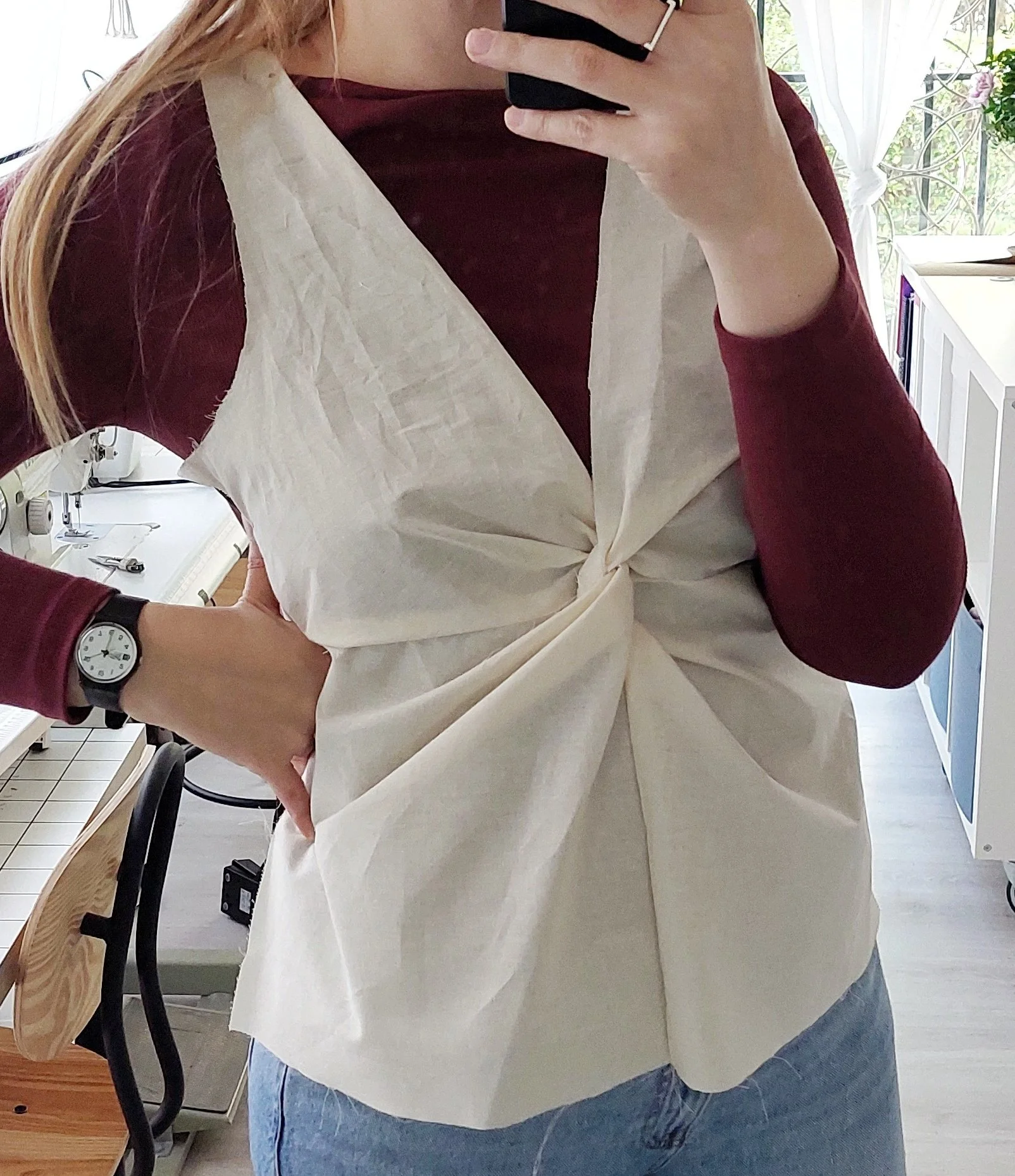
Once the bodice fitting was done there was a big part of dart manipulations that was more familiar to me, but I also learned more about cool draping stuff like this! Una vez terminadas las pruebas de cuerpo, había una gran parte sobre movimientos de pinzas en que tengo más experiencia, pero también aprendí sobre cosas chulas tipo drapeados como esto!
I mean, it’s not rocket science. You get the “general” idea when reading the fit books (by the way: I got so many new books to help me while I was doing the “wrestling with the patterns”, I can hopefully write about them soon). But I felt that things really started to click with my own measurements once I tried all of it out, failed, did it again (and again), saw the photos of my classmates, listened to the teachers’ feedback and finally connected the points. The general concepts are widely available out there (books, blogs etc), the specific fit is a whole journey.
Es decir, no es nada del otro mundo. Te haces una idea “general” al leer los libros sobre patronaje y ajustes (por cierto: me hice con un montón de libros nuevos que me ayudaron mientras “peleaba con los patrones”, espero poder escribir sobre ellos pronto). Pero sentí que las cosas empezaron a encajar de verdad con mis propias medidas una vez que lo probé todo, fallé, lo volví a intentar (una y otra vez), vi las fotos de mis compañeras, escuché los comentarios de Asun y, por fin, até cabos. Los conceptos generales están disponibles por allí (libros, blogs etc), el ajuste personal de cada uno es un camino.
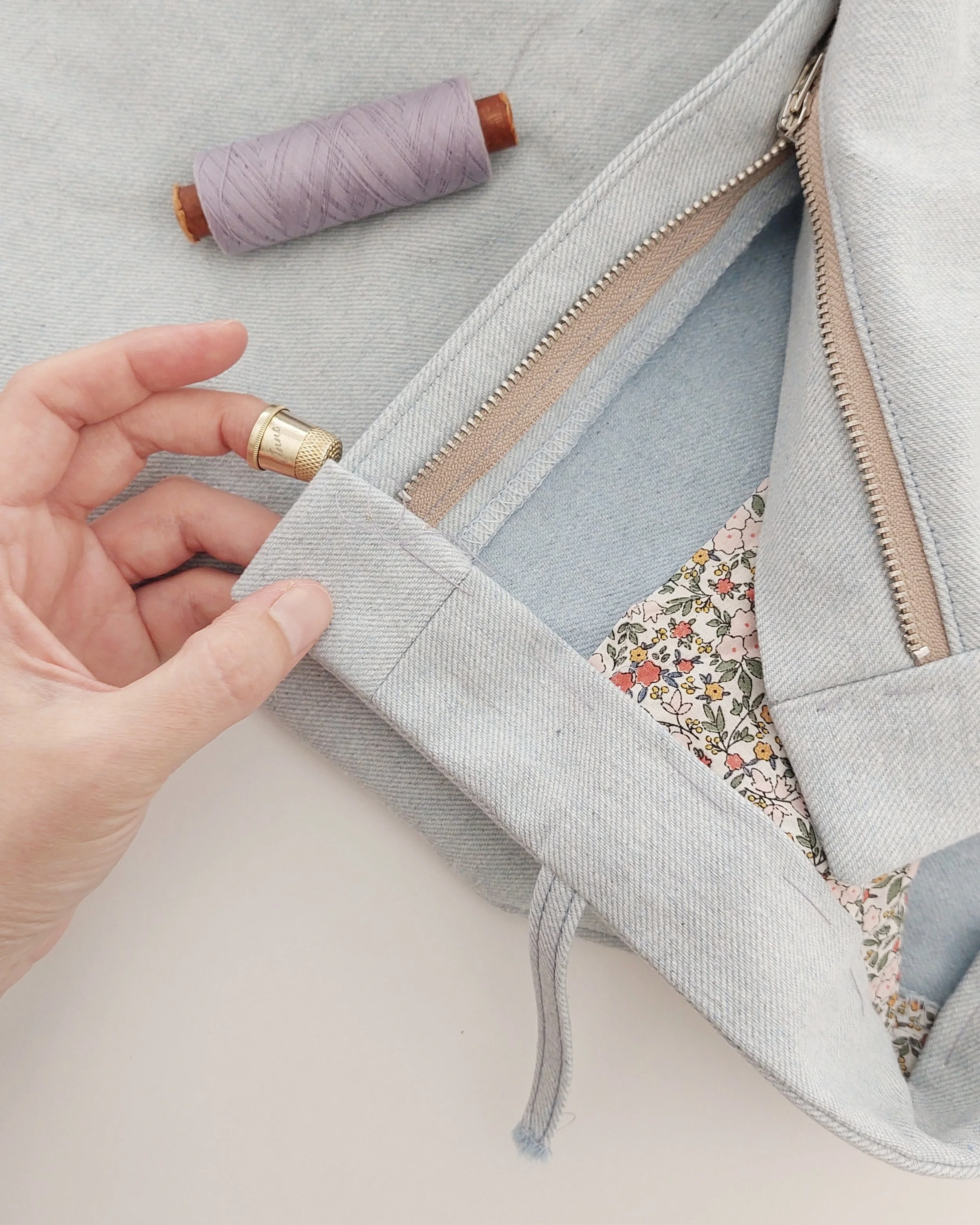
Apart from unpicking I now also hand baste where I usually didn’t do it…I’m a new person! Aparte de descoser, también hilvano donde no solía hacerlo…un ser nuevo!
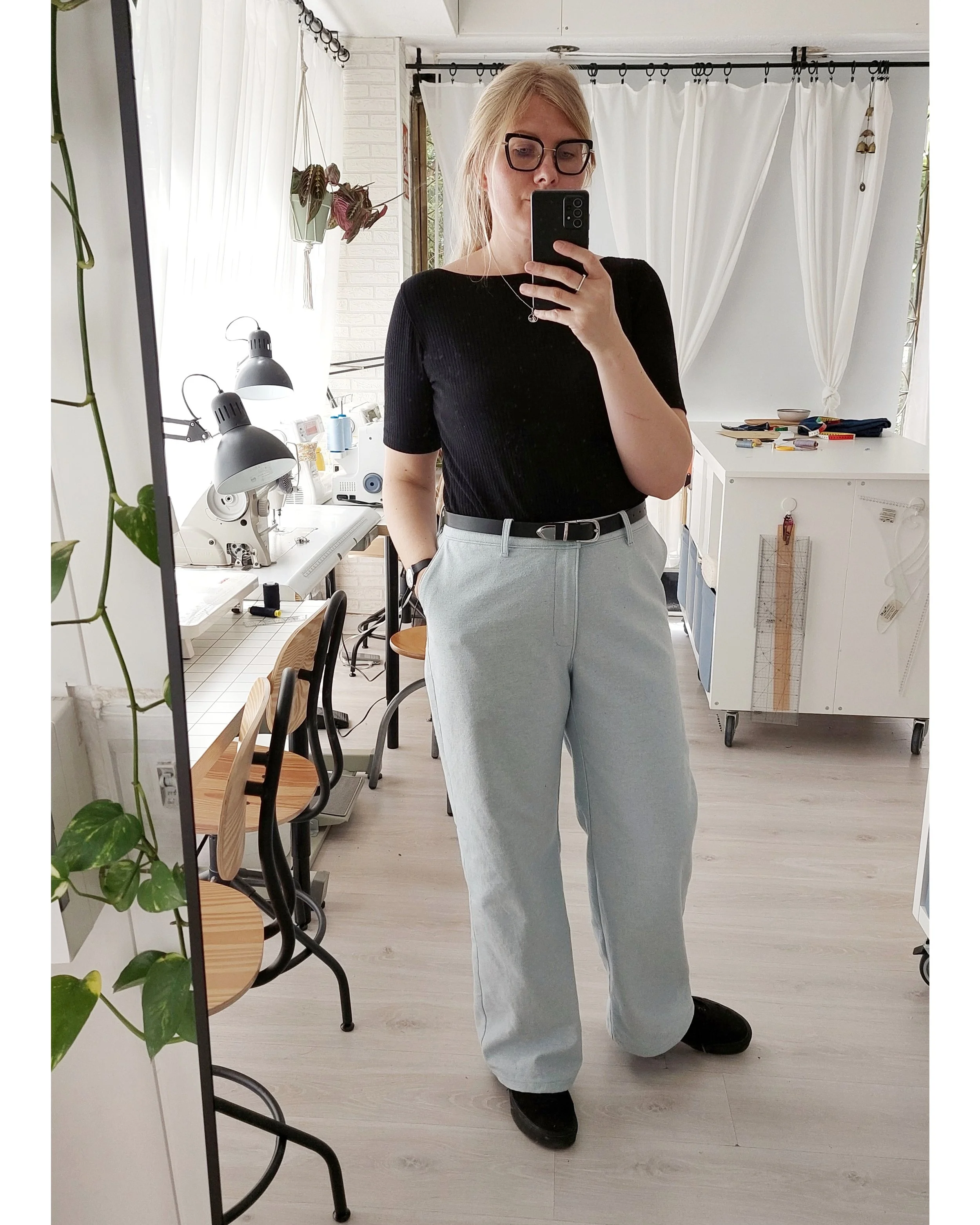
A finished pant with a wide leg pattern made in denim. El pantalón terminado con el patrón base de pierna ancha hecho en tela vaquera.
Going back to my notes after completing the course, I can now “see” the signs of a fit issue pretty clearly, but I assure you that I didn’t see the signs there before, even with all the theory in front of me. To me it’s fascinating to see how the layers of knowledge start piling up and you get better at “reading” the garment in front of you. I still feel that I have so much to practice to get my vision super sharp, but I also know it takes years of work to get there. Thankfully I can practice with my students every week, haha. I try to think like a zen master of learning here, instead of beating myself up and having extremely high standards in an unrealistic time frame. There are days…and there are days.
Al volver a mis apuntes después de terminar el curso, ahora puedo “ver” los indicios de un problema de ajuste con bastante claridad, pero te aseguro que antes no los veía, ni siquiera con toda la teoría disponible delante de mí. Para mí es fascinante ver cómo se van acumulando las capas de conocimiento y cómo vas mejorando a la hora de “leer” la prenda que tienes delante. Sigo sintiendo que me queda mucho por practicar para afinar el ojo, pero también sé que se necesitan años de trabajo para llegar hasta ahí. Por suerte, puedo practicar con mis alumnos cada semana, jaja. Intento pensar como un maestro zen del aprendizaje, en lugar de castigarme y exigirme estándares extremadamente altos en un plazo poco realista. Hay días… y hay días.
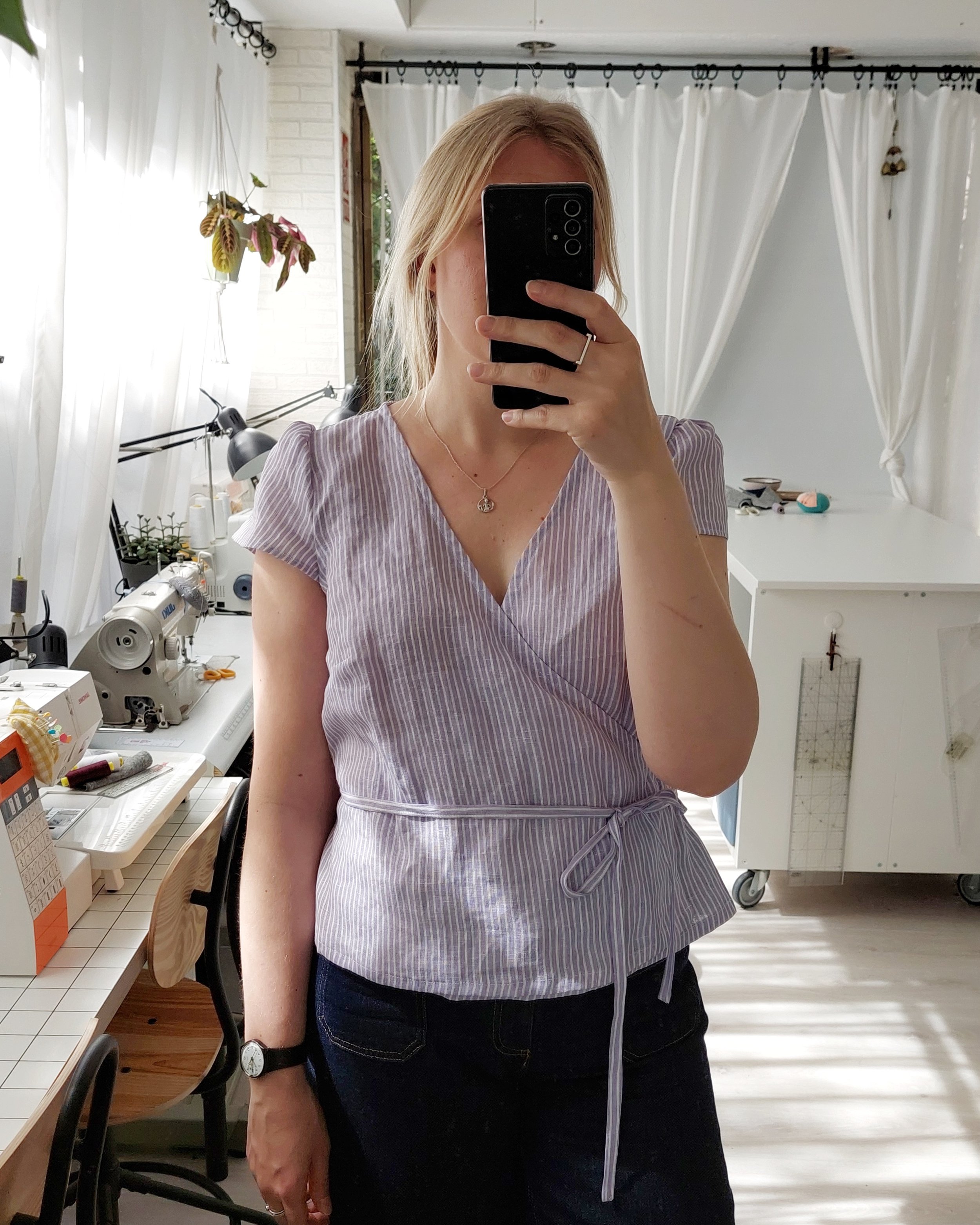
A wrap top I made to celebrate the end of close fitting bodice course. I learned a lot about how to adjust the wrap style to fit the bust area. Un top cruzado en lino que hice para celebrar el final del curso de cuerpos entallados. Aprendí muchas cosas sobre los cruzados y cómo ajustarlos bien a pecho de cada una.
While I write this, I still have a part of my notes that I need to properly organize, but I’ve signed up for course number 5, which is about coats and outerwear. Did I promise I’d finish the pending tasks before acquiring a new shiny object? Of course. Did I keep my promise? As a surprise to no one, of course I did not. But I have a deal with myself that I can only work on the new stuff as much as I work on the old stuff until it’s done, haha. The coats course is so promising! I love sewing outerwear so I’m super excited about working on these projects when I’m back home in Madrid. I still have two weeks in September before the weekly classes start, so I can hopefully have some sweet sewing time then.
Mientras escribo esto, todavía me queda una parte de mis apuntes que tengo que organizar bien, pero ya me he apuntado al curso número 5 de abrigos. Que si prometí que terminaría las tareas pendientes antes de lanzarme a por lo nuevo y briallante? Por supuesto. Cumplí mi promesa? Como era de esperar, claro que no. Pero tengo un trato conmigo misma: solo puedo dedicarle el tiempo al nuevo curso si he pasado la misma cantidad de tiempo con lo viejo hasta que esté terminado, jaja. El curso de abrigos tiene muy buena pinta! Me encanta coser prendas de abrigo, así que estoy deseando ponerme con estos proyectos cuando vuelva a casa a Madrid. Todavía me quedan dos semanas en septiembre antes de que empiecen las clases semanales, así que espero poder disfrutar de un buen rato de costura.
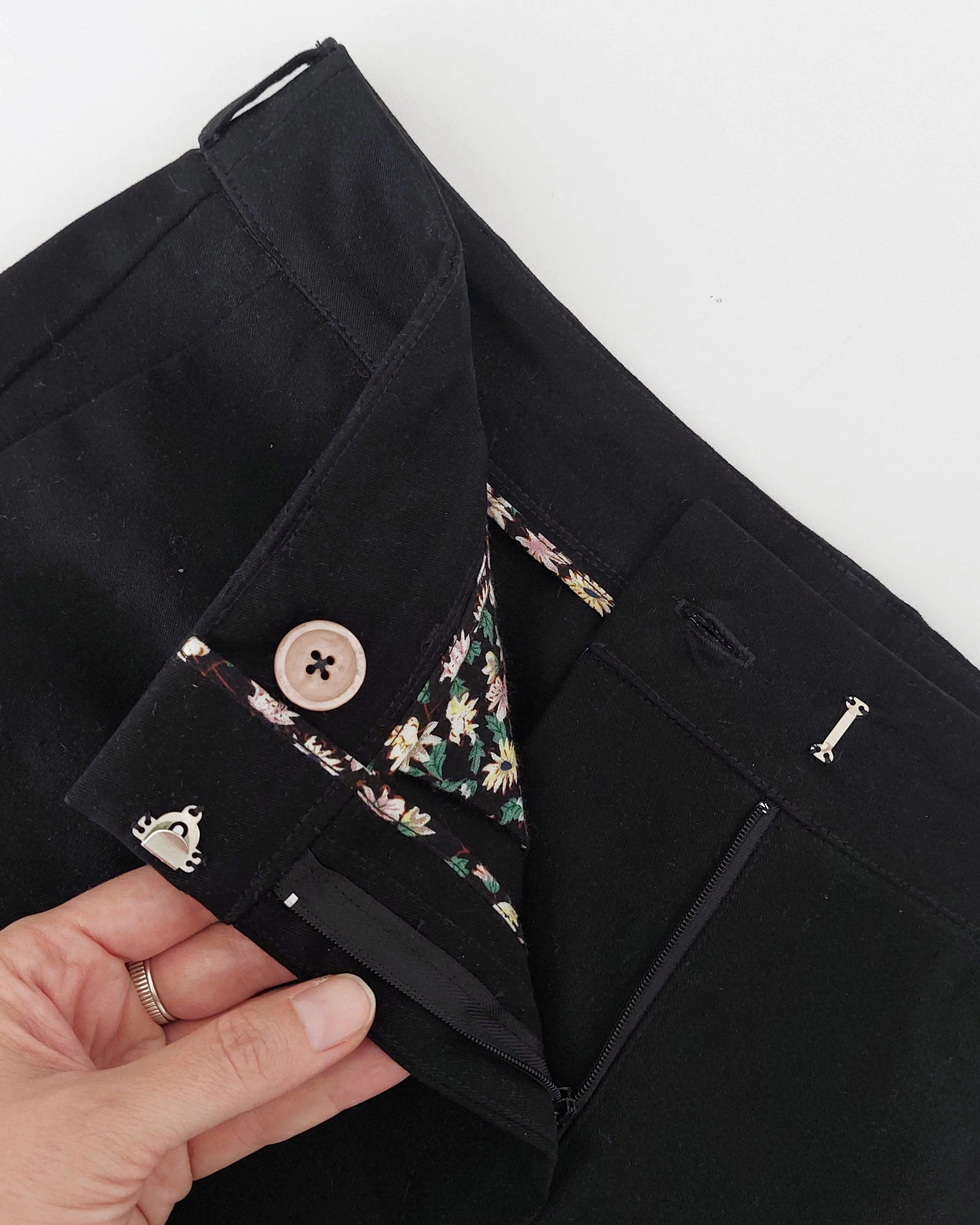
A pretty zipper fly, seen from the outside of the pant. Una bonita bragueta visto desde el exterior del pantalón.
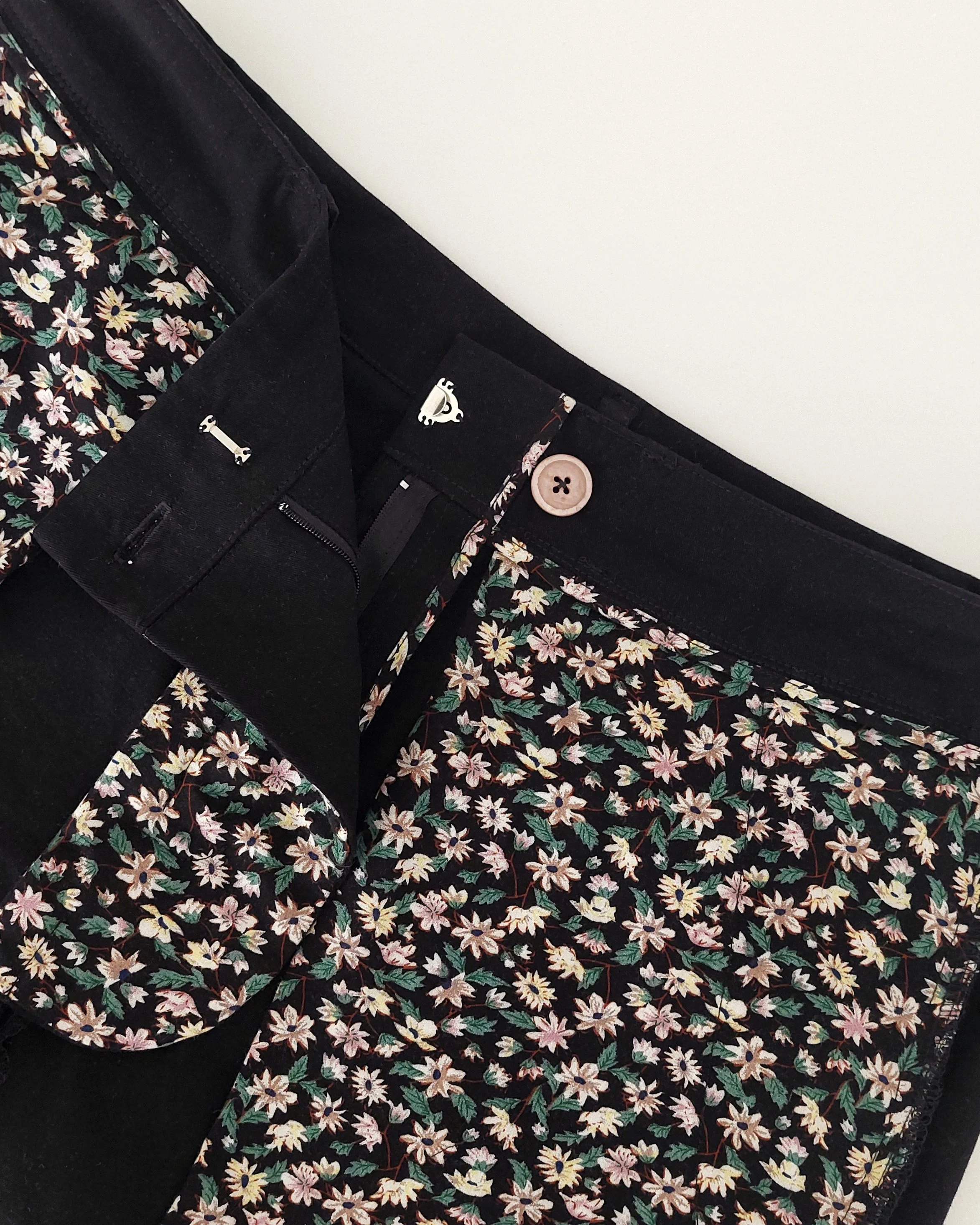
The same pant with floral pocket linings, fly lining and bias bindings in this floral viscose print for extra neat finish. El mismo pantalón con forros de bolsillos, forro de bragueta y bies en esta viscosa floral para un acabado extra limpio.
Apart from studying patternmaking, I did already use the skills from the pants course to create a simple shorts pattern for my classes. “The simple shorts pattern” also needed grading, digitalizing and a sewalong class, so I had my hands full with this one during July. I posted about it on Instagram asking if anyone was interested in a pattern or online course for something like this and it looks like the response was quite positive. Many times I don’t really know if a project like this (general/beginner sewing instead of more advanced lingerie sewing) is something that people would be interested in, but I guess the only way to know is by trying it out.
Además de estudiar patronaje, ya he usado los conocimientos del curso de pantalones para crear un patrón sencillo de pantalones cortos para mis clases. “El patrón sencillo de pantalones cortos” también requería escalado, digitalización y un tutorial de costura en formato de video, así que estuve ocupada con este proyecto durante el mes de julio. Pregunté en Instagram si alguien estaría interesado en un patrón o un curso online sobre algo así, y parece que la respuesta fue bastante positiva. Muchas veces no sé muy bien si un proyecto como este (costura general o para principiantes, en lugar de costura de lencería más avanzada) es algo que le interesaría a la gente, pero supongo que la única forma de saberlo es probándolo.
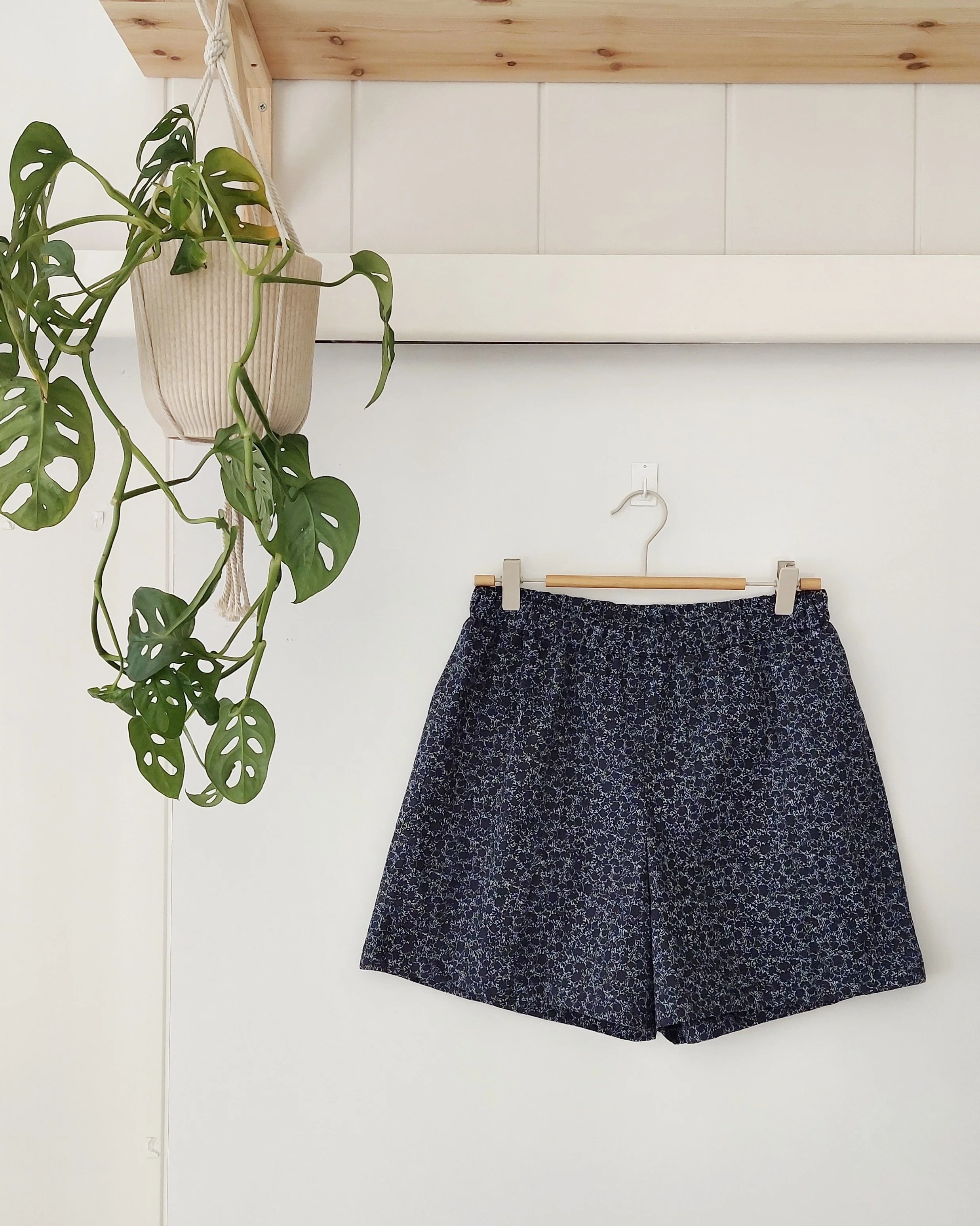
The simple shorts pattern at the studio. El patrón sencillo de pantalones cortos en el taller.
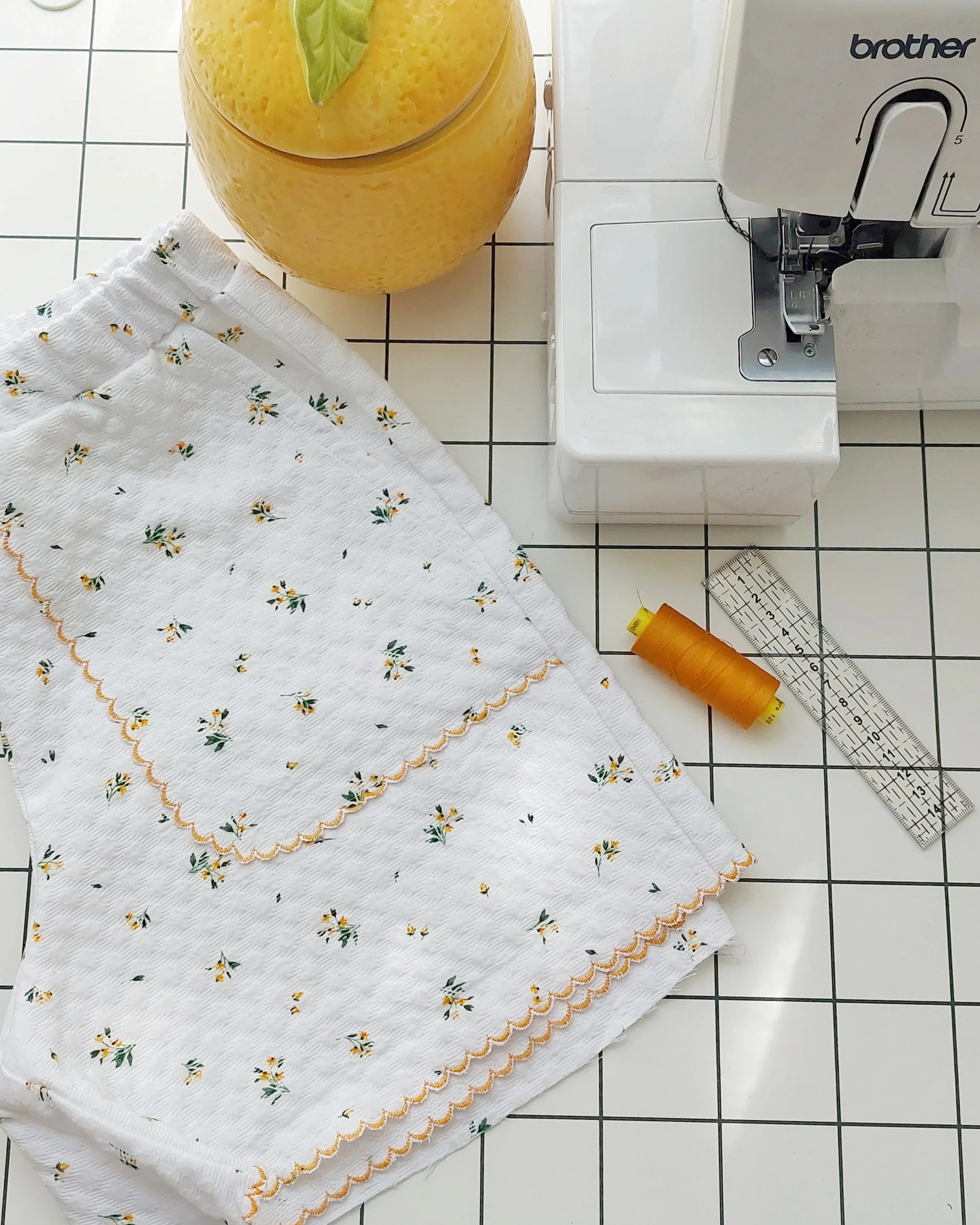
The cute scalloped edge version of the same pattern. La versión muy mona con los bordados de ondas del mismo patrón.
As a conclusion about the second part of my patternmaking studies, I’d say that an important shift in my mindset emerged during those months. I think that patternmaking is a very complex skill that is both important and non-negotiable for someone who is in the sewing business professionally. You really need to understand the whys behind the math and learn all the creative techniques to design different types of garments. But if you are a home sewist with a limited amount of time for this hobby, I’d say that it’s way more important and beneficial to learn about fit and how to make the patterns that already exist, fit your body. It makes such a massive change for the wearability of your garments.
Basically, I think you don’t need to put in all the hours of creating patterns from scratch, making toiles with your measurements, tweaking the fit of the toiles and then also doing all the design work to get to the intended garment you’re after. I mean, don’t get me wrong, if you have the time (lots of it) and you are interested in this, even when not doing it for work, go for it. Please do, it’s so exciting!
But my average students, even the very talented and interested ones, they usually don’t have infinite quantities of time to learn how to do all of it, because they also have their professions and sewing is a hobby for them. The design process might look like something easy, but to get the garment proportions just right, it actually takes a lot of skilled work (and time!). A well-drafted pattern with good instructions (that usually costs around 15–20 euros) will give you a major kickstart to start assessing your unique fit and to actually get sewing and making the garments you want to ultimately wear. Of course, you can’t really do it if you choose a 3 euro AI-generated bad-quality pattern, that will just make you lose way more than this fairly small proportion of money you’ve spent: you’ve lost precious sewing time. Please do yourself a favor and check pattern reviews on Threadloop (or see if they have a social media presence, etc.) before buying from random brands.
Como conclusión sobre la segunda parte de mis estudios de patronaje, diría que durante esos meses se produjo un cambio importante en mi forma de pensar. Creo que el patronaje es un saber muy complejo que resulta a la vez importante e imprescindible para alguien que se dedica profesionalmente a la costura. Es imprescindible comprender el porqué de los cálculos matemáticos y aprender todas las técnicas para diseñar diferentes tipos de prendas. Pero si eres una costurera aficionada con tiempo limitado, diría que es mucho más importante y beneficioso aprender sobre los ajustes y cómo adaptar los patrones ya existentes a tu cuerpo. Esto supone un cambio enorme en la comodidad de tus prendas.
Básicamente, creo que no es necesario dedicar tantas horas a crear patrones desde cero, coser prototipos con tus medidas, ajustar los prototipos y, además, realizar todo el trabajo de diseño para conseguir la prenda que tienes en mente. No me malinterpretes: si tienes tiempo (mucho) y te interesa esto, aunque no lo hagas por trabajo, adelante. Por favor, hazlo, me parece un tema super interesante.
Pero mis alumnos habituales, incluso los que tienen más talento e interés, no suelen disponer de tiempo ilimitado para aprender a hacerlo todo porque ellos ya tienen sus trabajos y coser es su hobby. El proceso de diseño puede parecer algo fácil, pero conseguir que las proporciones de la prenda sean las adecuadas. requiere en realidad mucho trabajo especializado (y tiempo!). Un patrón bien hecho con instrucciones detalladas (que suele costar entre 15 y 20 euros) te dará un punto de partida muy bueno para empezar a ver tus ajustes específicos y ponerte manos a la obra con la costura para que puedas realmente hacer las prendas que quieres llevar. Por supuesto, no podrás hacerlo si eliges un patrón de mala calidad generado por IA que cuesta 3 euros, ya que eso solo te hará perder mucho más que esa pequeña cantidad de dinero que has gastado: habrás perdido un tiempo valioso que podrías haber dedicado a coser. Hazte un favor y consulta las reseñas de los patrones en Threadloop (o comprueba si la marca tienen presencia en redes sociales, etc) antes de comprar a marcas al azar.
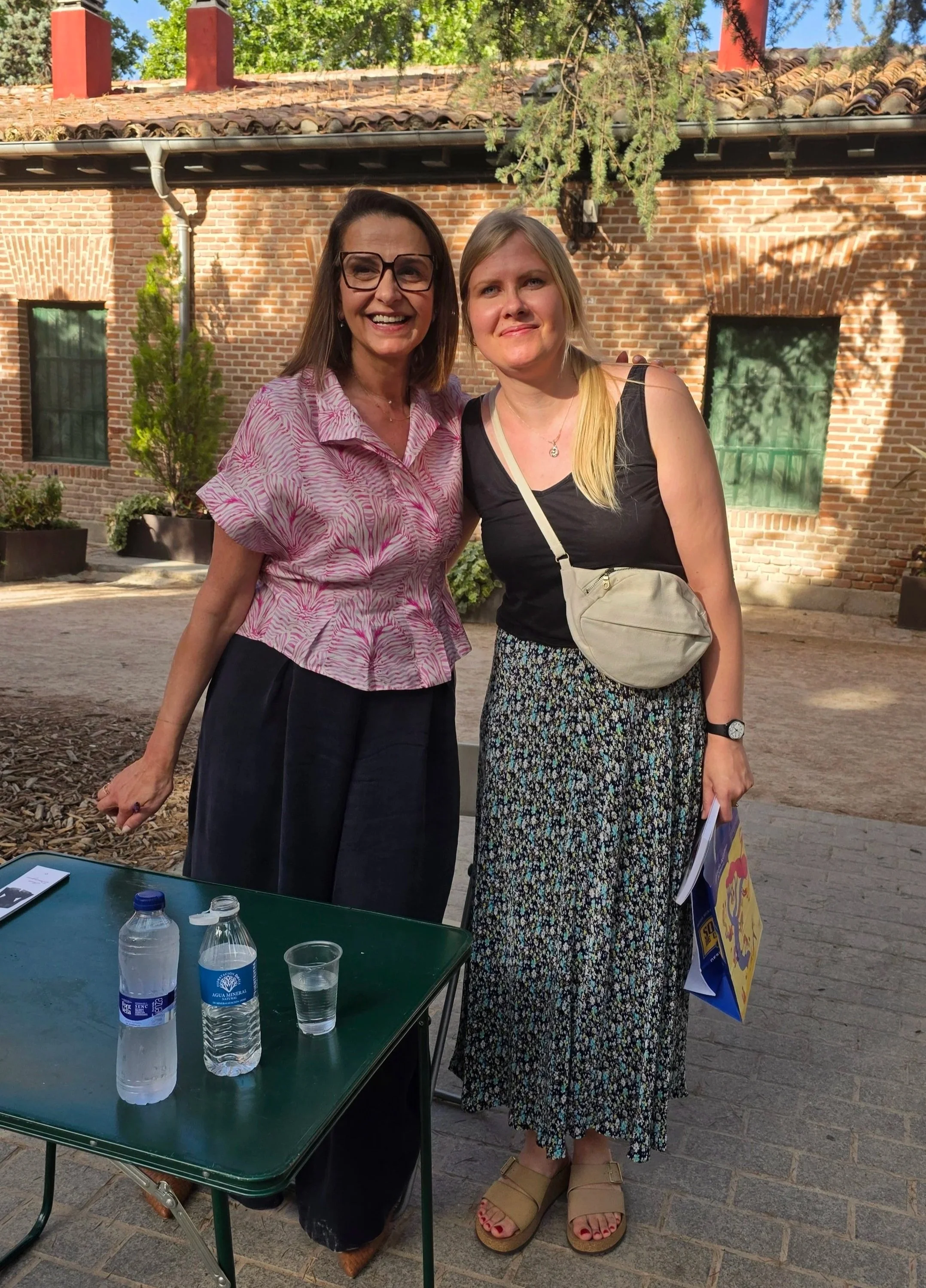
In June my teacher Asun was in Madrid presenting her book so I obviously stood in line to greet her. This photo is taken after her official time at the bookfare stand was over and they needed to relocate her so she could continue signing the books because there were so many people who attended her book signing. En junio Asun vino a presentar su libro en la feria de libro así que me puse en la cola en el Retiro para poder saludarla. Esta foto la sacaron ya cuando nos desalojaron del puesto del editorial porque el fenómeno Asun traía a tanta gente que ella tuvo que seguir firmando pasado su hora prevista, detrás de los puestos.
So, I know that this might be a controversial topic and other people might have other opinions (that’s cool, we’re all different). In Spain it’s historically very common for people to learn sewing from scratch together with patternmaking (for hobby sewists). I’ve always thought (and expressed) that I think it’s like trying to invent the wheel so you can learn how to ride a bike. I mean I can kind of get the idea behind making your own pattern with your own proportions, but why would you be working on a sleeve cap if you’ve never even sewed a sleeve before? It can be so confusing for a complete beginner! I guess you could say that it used to be non-negotiable for plus sizes, but with a variety of pattern companies who are now producing patterns in wide size ranges and educating about how to fit them, I’d say that today we have the resources to make the learning process better and more enjoyable (for example I’ve loved Cashmerette Fitting University so much).
This year of working very closely with my body measurements and (mostly ugly) toile photos has also reminded me of how delicate the body image and sizing topic is. Many people still find that the best way to make a garment fit is to “lose some weight”. Or to put on compressive undergarments. For me, sewing is precisely something that finally allows you to be in charge of making garments that fit your body, and not the other way around. It’s a highly sensitive topic for me as a teacher (apart from me as a person who has struggled with this for a long time too), and I really hope that the environment I create in my classes will be as supportive as possible.
Bueno, sé que este puede ser un tema polémico y que otras personas pueden tener opiniones diferentes (no pasa nada, todos somos distintos). En España, históricamente ha sido muy habitual que la gente aprenda a coser desde cero junto con el patronaje, la famosa “corte y confección” (hablo de gente que aprende para coser como hobby, no solo ese nombre como un título en formación profesional donde el propísto es diferente). Siempre he pensado (y expresado) que me parece como intentar inventar la rueda para aprender a montar en bicicleta. Entiendo, en cierto modo, la idea de crear tu propio patrón con tus propias medidas, pero por qué te pondrías a trazar la copa de la manga si nunca antes has cosido una manga? Eso puede resultar muy confuso para alguien que empieza de cero, no? Supongo que se podría decir que antes era algo imprescindible para las tallas grandes, pero ahora que hay diferentes empresas de patrones que producen patrones en amplias gamas de tallas y enseñan cómo ajustarlos, diría que hoy en día contamos con los recursos para que el proceso de aprendizaje sea mejor y más agradable (por cierto, me ha encantado el Fitting University de Cashmerette para eso).
Este año, en el que he trabajado muy de cerca con mis medidas corporales y con fotos de toiles (en su mayoría horribles), también me ha recordado lo delicado que es el tema de la imagen corporal y las tallas. Muchas personas siguen pensando que la mejor manera de que una prenda les quede bien es “adelgazar un poco”. O ponerse ropa interior tipo faja. Para mí, coser es precisamente algo que, por fin, te permite poder elegir y crear prendas que se adapten a tu cuerpo, y no al revés. Es un tema muy delicado para mí como profesora (aparte de como persona que ha luchado con ese tema durante mucho tiempo también), y espero de verdad que en mis clases haya un ambiente donde se siente ese enfoque.
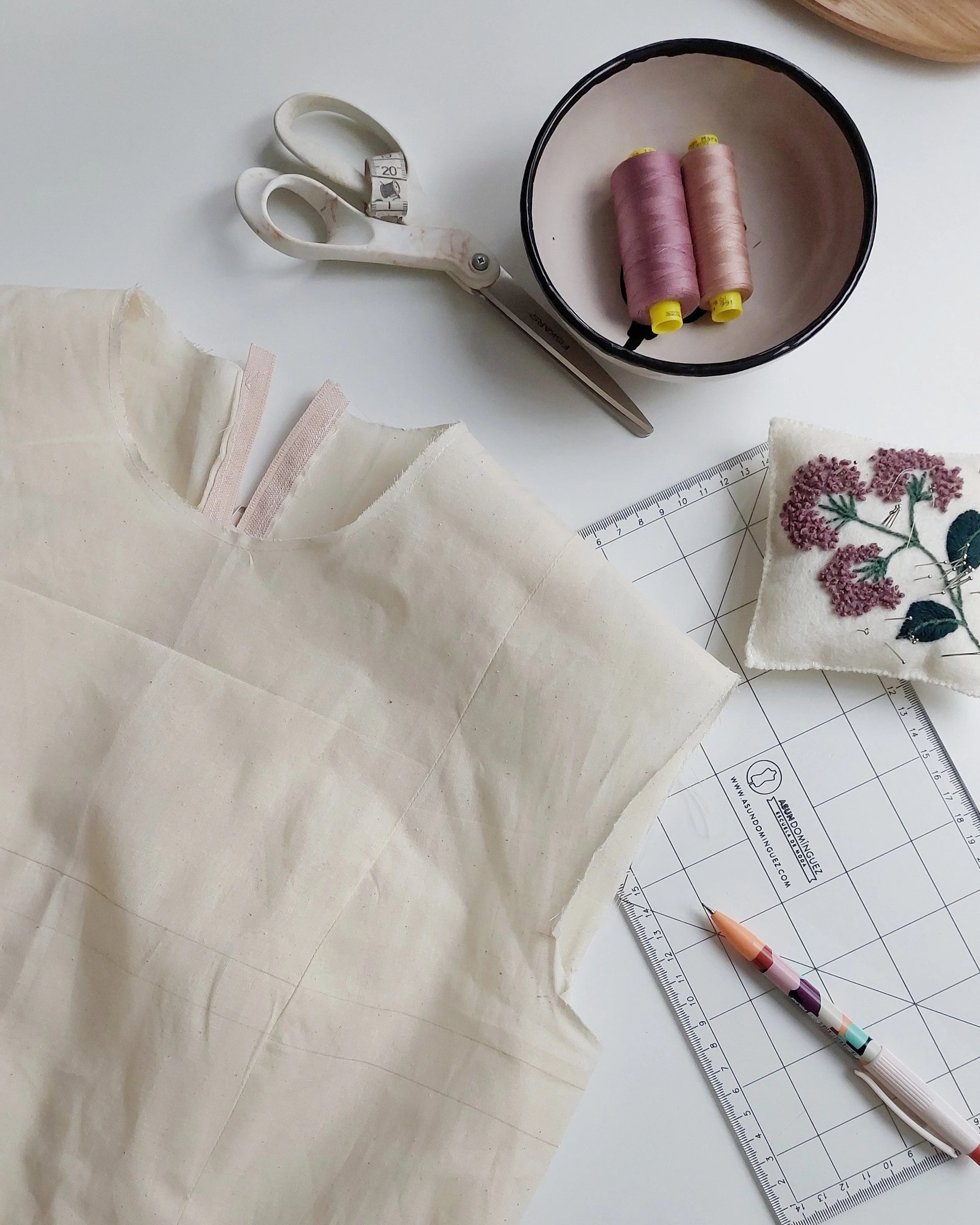
One of my goals for the near future is creating base patterns we can further tweak in class with mid-level students. I’m very excited about having some base patterns that work kind of as a Lego to build up on. I think it will be beneficial for the students and it’s definitely very interesting for me too. Last year gave me so much new knowledge and I’m eager to actively use it to figure out all the different class projects.
I said it’s annoying to see you don’t know all of it yet, I still feel it deeply. But it’s also so rewarding to see that the puzzle pieces you do already have, start forming something that looks like a real picture. I’m really curious about everything we can create together!
With this, I’m wishing you a great autumn with lots of sewing. Thanks for stopping by and if you like the stuff around here, consider signing up for my newsletter so you can have all the new blog posts delivered to your inbox.
Uno de mis objetivos para el futuro próximo es crear patrones básicos que podamos seguir perfeccionando en clase con los alumnos de nivel intermedio. Me hace mucha ilusión disponer de unos patrones básicos que funcionen un poco como piezas de Lego sobre las que ir construyendo. Creo que será beneficioso para los alumnos y, sin duda, también es muy interesante para mí. El año pasado adquirí muchísimos conocimientos nuevos y estoy deseando ponerlos en práctica para dar forma a todos los diferentes proyectos de clase.
Ya dije que es frustrante ver que aún no lo sabes todo, y sigo sintiéndolo y mucho. Pero también es muy gratificante ver que las piezas del puzzle que ya tienes, empiezan a formar algo que se parece a una imagen real. Tengo mucha curiosidad por ver todo lo que podemos crear juntos.
Con esto, te deseo un comienzo de curso lleno de costuras. Gracias por pasarte por aquí y, si te gusta lo que ves, puedes suscribirte a mi newsletter para recibir todas las nuevas entradas del blog directamente en tu bandeja de entrada.